
We want to ensure that our people feel supported with all aspects of their health and wellbeing. Here you will find some specific support services, tools and signposting to services that provide specialist support for Women’s Health.
WMAS Women’s Network

West Midlands Ambulance Service Women’s Network is keen to welcome any women and allies to participate in the group. The purpose of the group is to improve and enhance women’s experience working within the organisation and to provide mentorship, support and guidance. Focusing on women’s issues as well as their health and wellbeing.
The Network currently meets virtually and is co-chaired by Sonia Bhattle & Rebecca Parker-Williams, who can be contacted on sonia.bhattle@wmas.nhs.uk / rebecca.pwilliams@wmas.nhs.uk for details of the next meeting.
Menopause Support – What is menopause
The menopause is when a woman stops having periods and is no longer able to get pregnant naturally. Periods usually start to become less frequent over a few months or years before they stop altogether. Sometimes they can stop suddenly.
The menopause is a natural part of ageing that usually occurs between 45 and 55 years of age, as a woman’s oestrogen levels decline. In the UK, the average age for a woman to reach the menopause is 51. However, around 1 in 100 women experience the menopause before 40 years of age. This is known as premature menopause or premature ovarian insufficiency.
Most women will experience menopausal symptoms. Some of these can be quite severe and have a significant impact on your everyday activities.
Common symptoms include:
- hot flushes
- night sweats
- vaginal dryness and discomfort during sex
- difficulty sleeping
- low mood or anxiety
- reduced sex drive (libido)
- problems with memory and concentration
Menopausal symptoms can begin months or even years before your periods stop and last around 4 years after your last period, although some women experience them for much longer.
Read more about the symptoms of menopause or click here to access the Menopause Passport support document.

Support for menopause – WMAS Menopause Passport
We recognise that the symptoms of menopause are very individual and can also be difficult to talk about. We have therefore introduced the use of the ‘Menopause Passport’. This is a tool to assist with starting those sensitive conversations to understand how we can support staff experiencing issues through the menopause.
This is an optional tool and can be used independently to record individuals own symptoms or in conjunction with a Manager/HR Representative as part of a welfare conversation. This will help aid a discussion to consider any support or adjustments that may be required in the workplace to be reviewed as and when symptoms change. To access the Menopause Passport, please click the image to the left.

Introducing Peppy: Health Support in your Pocket
WMAS is dedicated to supporting your health and wellbeing throughout all of life’s stages. That’s why we’re pleased to introduce peppy, a free and confidential mobile app that gives you unlimited access to expert support.
Peppy connects you directly with specialist practitioners, who provide personalised, real-time support via chat, alongside the opportunity to connect through live virtual events.
Peppy provides support across several key areas to help you navigate life’s major health transitions including on menopause, fertility, pregnancy and more! Click here to view their website to learn more about their platform

When to see your GP
It’s worth talking to your GP if you have menopausal symptoms that are troubling you or if you’re experiencing symptoms of the menopause before 45 years of age.
Your GP can usually confirm whether you are menopausal based on your symptoms, but a blood test to measure your hormone levels may be carried out if you’re under 45.
Your GP will be able to support you to discuss the best available support, treatment and any recommended lifestyle changes to help you manage your symptoms.
Treatments for menopausal symptoms
Your GP can offer treatments and suggest lifestyle changes if you have severe menopausal symptoms that interfere with your day-to-day life, including:
- hormone replacement therapy (HRT) – tablets, skin patches, gels and implants that relieve menopausal symptoms by replacing oestrogen
- vaginal oestrogen creams, lubricants or moisturisers for vaginal dryness
- cognitive behavioural therapy (CBT) – a type of talking therapy that can help with low mood and anxiety
- eating a healthy, balanced diet and exercising regularly – maintaining a healthy weight and staying fit and strong can improve some menopausal symptoms
Your GP may refer you to a menopause specialist if your symptoms don’t improve after trying treatment or if you’re unable to take HRT.
Read more about treating the menopause.
What causes the menopause?
The menopause is caused by a change in the balance of the body’s sex hormones, which occurs as you get older.
It happens when your ovaries stop producing as much of the hormone oestrogen and no longer release an egg each month.
Premature or early menopause can occur at any age, and in many cases, there’s no clear cause.
Sometimes it’s caused by a treatment such as surgery to remove the ovaries (oophorectomy), some breast cancer treatments, chemotherapy or radiotherapy, or it can be brought on by an underlying medical condition, such as Down’s syndrome or Addison’s disease.
Source: www.nhs.uk
If you need further support and advice, please contact your local HR Advisor or Health and Wellbeing Champion.
Menopause Champions and Advocates
The Trust has invested in training 22 staff as Menopause Champions with the support of Henpicked, who will soon be advertising 30 minute awareness sessions available for all staff to attend. Check back for details of sessions coming soon! Henpicked are also working with the Trust to help us review the support, guidance and advice that we can provide to staff to help have effective and supportive conversations around their needs at work.
If you need assistance, the Trust has a number of Menopause Champions and Advocates who can support and signpost you to help. Menopause Champions and Advocates are identifiable by the pink lanyards. Click here for the details of our Menopause Champions and how to contact them.

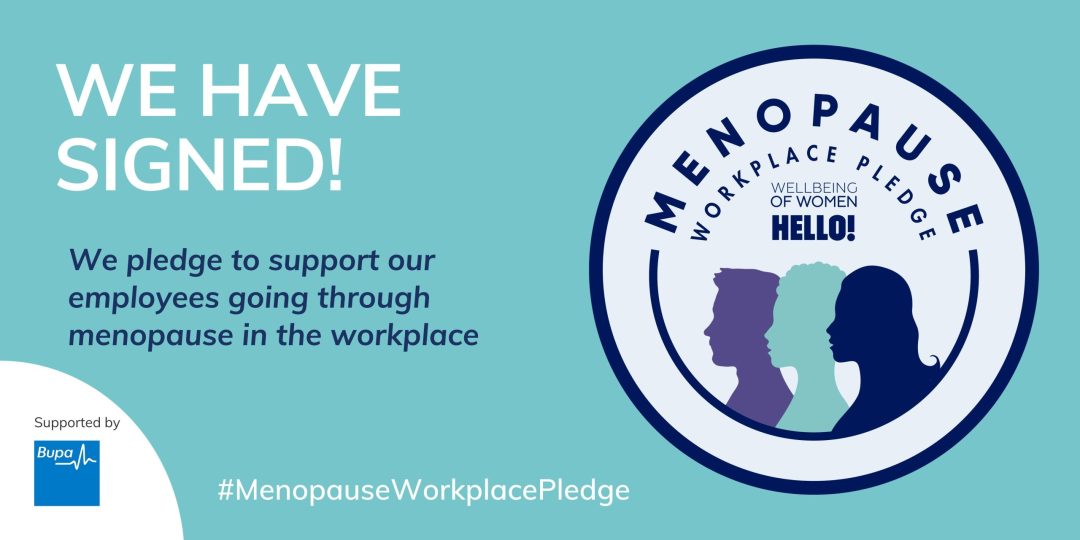
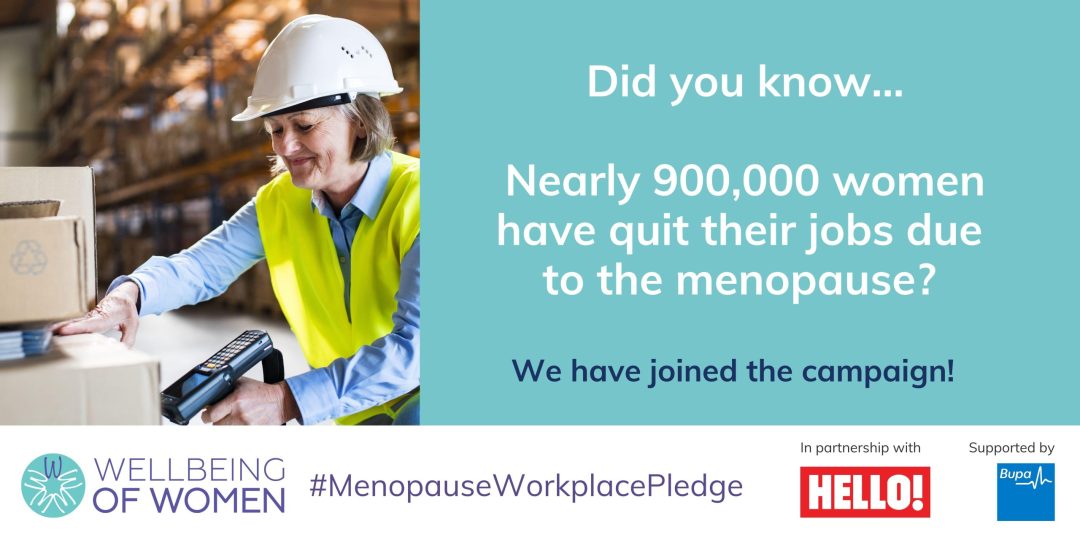
Wellbeing of Women Menopause Workplace Pledge
Menopause Champions
Karen Evans – karen.evans2@wmas.nhs.uk
Lucy Butler – lucy.butler@wmas.nhs.uk
Louise Berry – louise.berry@wmas.nhs.uk
Melony Fox – melony.fox@wmas.nhs.uk
Michelle Round – michelle.round@wmas.nhs.uk
Natalie Bishop – natalie.bishop@wmas.nhs.uk
Rebecca Parker-Williams – rebecca.pwilliams@wmas.nhs.uk
Teresa Bednallangell – Teresa.bednallangell@wmas.nhs.uk
Tessa White – tessa.white@wmas.nhs.uk
Debbie Nicklin – debbie.nicklin@wmas.nhs.uk
Tracie Wilks – tracie.wilks@wmas.nhs.uk
Emma Bywater – emma.bywater@wmas.nhs.uk
Gemma Summers – gemma.summers@wmas.nhs.uk
PERIOD POVERTY
If you are unable to afford sanitary products due to financial constraints, this is known as period poverty.
Accessing sanitary products is necessary for the wellbeing of girls and women to enable them to manage their menstrual health. Thankfully, the trust was successful in a bid for funds from AACE (Association of Ambulance Chief Executives) to be able to provide free sanitary products to all staff across the Trust. The monies awarded was used to purchase and install a free vend unit in every female toilet block across the Trust, a total of 34 units. In addition, the bid enabled the purchase of a large supply of sanitary towels and tampons, in a variety of flow sizes. We wish to encourage people to pay it forward by adding products to the free vend machines when the initial stock has been used. We know that there are several reasons why this initiative will be beneficial to people in the Trust, including from a period poverty perspective, to supporting people experiencing menopause and other health issues such as heavy and irregular bleeding, in addition to being available to any staff that don’t have products with them that they need.
You may be in a position where due to unforeseen circumstances, you find yourself in this position and need support to manage your menstrual health, or you may want to help others that find themselves in a situation where they need support.
You may find it an uncomfortable topic to talk about needed support with sanitary products however there are lots of avenues of support who will treat your needs sensitively and confidentially. You can contact any manager, member of the HR team or your trade union representative. Additionally our team of Health and Wellbeing Champions and Menopause Champions will also be able to support you.
For further information see Period poverty | Royal College of Nursing (rcn.org.uk)

|
Menopause Webinars and Support If you decide to approach the menopause informed and empowered then the Trust’s recorded menopause webinars really is a great place to start. You will come away curious and confident to start the conversation with your partner, family, friends and work. If you want to access any of the previous webinars sessions, please click here: – Introduction to the Menopause – Watch here – Symptoms of the Menopause – Watch here – Treatments for the Menopause – Watch here – What if the Menopause doesn’t affect me? – Watch here – Non HRT Treatments – Watch here – Psychological effects of the Menopause – Watch here – Is it just hormones? – Watch here – Menopause in the Workplace – Watch here – Peri-menopause – Watch here – Seeking advice and support – Watch here – Physical effects of the Menopause – Watch here – Davina McCall: Sex, Mind and the Menopause | Channel 4 Documentaries – YouTube
|

Let's #ChatMenopause
|
Please take the time to listen to Penny Lancaster and Carolyn Harris MP talk about their menopause experiences and journey and why talking is so important: Click here to listen |

Library Resources – Menopause
|
Please view the fantastic ‘menopause books’ within the Trust library. Details of how to access and reserve your books can be found on the intranet menopause page. |

Click on the above picture for facts about the menopause and perimenopause, useful links and menopause cafes in your local area.
To help you to learn more about the psychological symptoms of menopause, we have published two new articles by Dr Clare Spencer – Registered Menopause Specialist, GP and Co-Founder of My Menopause Centre. Links below:
Menopause and Mood – Dr Spencer
Menopause and Cognition – Dr Spencer
Endometriosis Support
Understanding Endometriosis
Pain and symptom diary
Medical treatment for endometriosis
Hints and tips for dealing with employers
Having a Hysterectomy
Getting a diagnosis
Endometriosis symptoms leaflet
endometriosis support leaflet
Endometriosis UK diagnosis survey
Endometriosis UK - Laparoscopic Surgery
Endometriosis UK - Endometriosis, Fertility and Pregnancy
Endometriosis UK - Bladder Endometriosis
Consultation_Questionnaire
Bowel Endometriosis
AMENDED - Endometriosis UK - Employee guide
Endometriosis Webinar
